
Niva Followers Login & Account Access Guide
This guide helps you distinguish an app account prompt, web authorization, Android permission request, and later session or service behavior without assuming they are the same thing. If you need the main app details first, review Niva Followers before using this page to understand the account-access stage.
This guide does not assume that one username, email, password or Instagram sign-in method applies to every Niva Followers build. Read the prompt shown by the installed app before deciding what information belongs there.
What We Can Confirm About Niva Followers Login
The current APK details are established, but one universal login sequence is not. Keeping those two facts separate prevents an old tutorial or unrelated build from becoming the instructions for the app in front of you.
Version 8.5.2
This is the Niva Followers APK version currently provided by this website.
com.nivafollower
This package identifier is established for the current site-provided APK.
Not Universally Established
This project has not established one exact sign-in method that should be assumed for every current screen or service state.
Check the Current Prompt
Exact username, email, password or other required fields are not being invented from third-party tutorials.
Verify the Destination
Do not assume that every Instagram-looking prompt has the same purpose. Check what page or service is requesting access before continuing.
Not Established Here
Auto-login, session duration, balance restoration and account-history restoration are not treated as confirmed features without evidence.
Which Type of Login or Access Screen Are You Seeing?
A screen that appears during account access is not automatically a Niva Followers username-and-password form. Identify whether the request comes from the app, a web authorization page, Android itself or an already-active session before entering information.
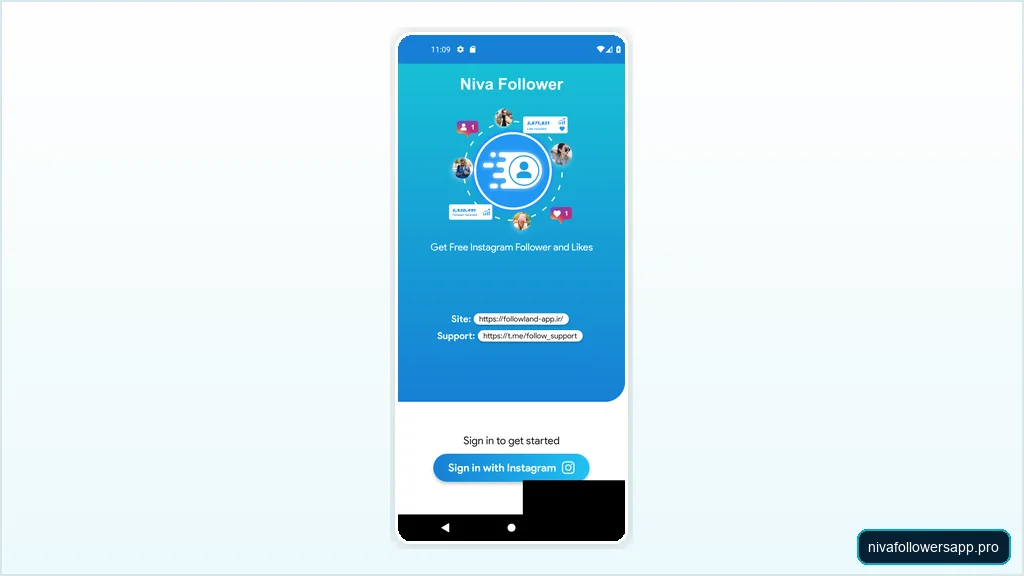
App Account Prompt
This is a form or access screen displayed within the app. Read the labels shown by the current build instead of assuming which username, email or password field should exist.
Instagram / Web Authorization
A browser or webview can open a separate authorization page. Confirm the destination, service name and access being requested before providing account information.
Android Permission Prompt
Android may ask whether an app can use a device feature or permission. That system dialog controls app access and should not automatically be interpreted as an account-login request.
Existing Session / Service State
The application may already be open or have an existing session while a later account or online-service stage behaves differently. Those states should not all be labelled as one login problem.
What to Check Before Entering Login Information
The first question should not be which password to enter. Start by identifying which app, website or system is asking for information, what the prompt says, and why that access is being requested. If you are unsure whether the device meets the Android baseline before troubleshooting access, check the compatibility guide. If you are unsure whether the device meets the Android baseline before troubleshooting access, check the compatibility guide. If you are unsure whether the device meets the Android baseline before troubleshooting access, check the Niva Followers app for Android compatibility guide.
Identify the App or Service
Determine whether the request comes from Niva Followers, a separate web page, Android itself or another service before entering account information.
Read the Field Labels
Use the labels shown on the current screen instead of assuming that an old tutorial’s username, email or password fields still apply.
Check the Destination
If a browser or webview opens, review the visible service identity and destination before entering information or approving access.
Understand What Is Being Requested
A prompt may relate to an account identifier, authorization, Android permission or another type of access. These should not be treated as the same request.
Keep Verification & Recovery Data Private
Do not send one-time codes, recovery codes, backup codes, session cookies, authentication tokens or screenshots containing passwords to someone offering account-access help.
Stop if the Prompt Is Unclear
If you cannot identify who is asking or why the information is needed, re-check the screen rather than guessing which credentials belong there.
App Login vs Instagram or Web Authorization
An account form displayed inside an app and a separate web authorization page are different access models. The current project does not assume that either one always appears or that both use the same credentials. If the access process stalls or the app stops responding after the prompt, use the guide to identify whether the failure is local, account-related, or service-related. If the access process stalls or the app stops responding after the prompt, use the guide to identify whether the failure is local, account-related, or service-related. If the access process stalls or the app stops responding after the prompt, use the Niva Followers troubleshooting guide to identify whether the failure is local, account-related, or service-related.
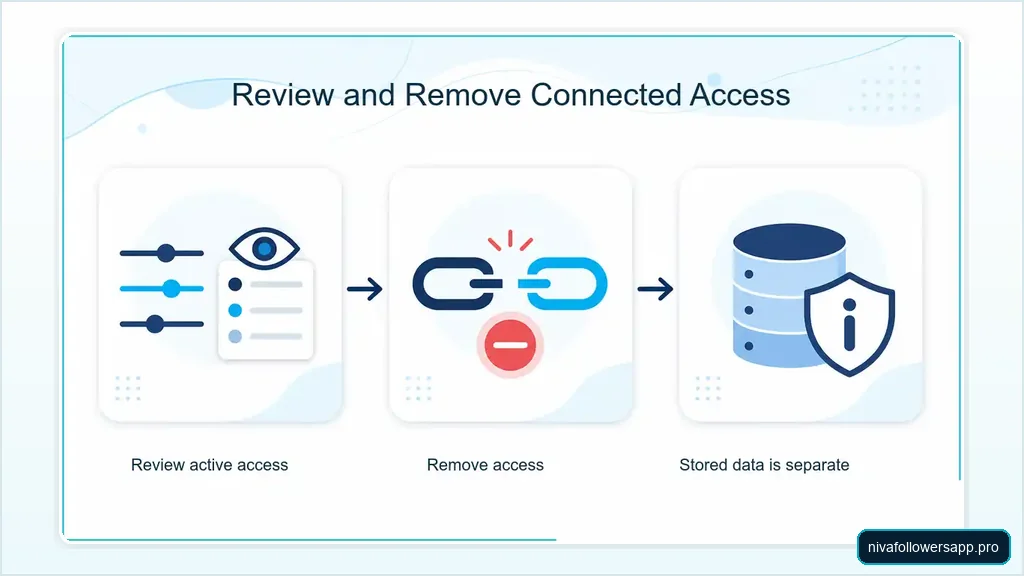
App Account Prompt
If the current Niva Followers build displays an account form inside the app, read the actual field labels and instructions shown there. This project does not assume a fixed username, email or password format.
Instagram / Web Authorization
If a browser or webview opens, treat that as a separate authorization context. Review which site or service is shown and what access is being requested before continuing.
Android Permission Prompts Are Not Account Login
Android can display system-level permission requests while an app is being used. Those dialogs control access to an app or device capability and should not automatically be treated as a Niva Followers sign-in screen.
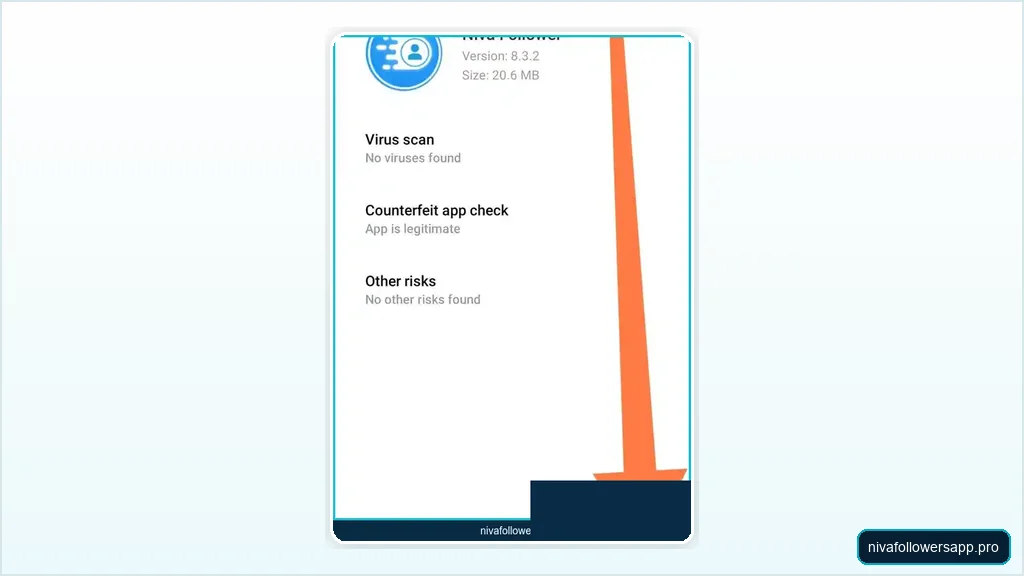
Login, Session & Service State Are Different
Not every account-related issue is the same type of login problem. Authentication, an existing session, the app opening successfully and a later online service state are separate layers that can behave differently. Once access is no longer the issue, review to separate the later task, balance, request, and status stages from the login step itself. Once access is no longer the issue, review to separate the later task, balance, request, and status stages from the login step itself. Once access is no longer the issue, review how Niva Followers works to separate the later task, balance, request, and status stages from the login step itself.
Login / Authentication State
This is the stage where an app or service may ask the user to establish or confirm account access. The exact Niva Followers authentication method is not being assumed by this guide.
Existing Session State
The app may appear to retain access from an earlier session, but this project has not established session duration, storage behavior or automatic session restoration.
App-Open State
The application opening successfully does not prove that every account session is valid. Likewise, seeing an account prompt does not by itself prove that the APK is incompatible or broken.
Online Service State
A user can move beyond the initial access stage while a later online feature has a separate service condition. That later behavior should not automatically be called a login failure.
What to Check When the Login or Access Screen Does Not Continue
Before treating the situation as a failed login, identify what the current screen is waiting for and what happens immediately after the attempted access step. This section clarifies the state; it is not a full troubleshooting guide.
Check Whether Input Is Still Required
Look at the current screen to see whether a field, confirmation or other visible user action is still waiting to be completed. Do not invent a missing field from an older tutorial.
Check Whether Another Page Opened
If a browser, webview or separate authorization page appeared, identify that page before assuming the original app account step failed.
Check for an Android System Decision
If Android is displaying a system permission request, that decision is separate from account authentication and should not automatically be labelled a login error.
Note Whether the Same Screen Returns
If the app returns to the same access screen after an action, note that behavior without assuming the cause. Deeper diagnosis belongs to the dedicated troubleshooting path.
Check Whether You Are Already Past Login
If the app has already opened into its main experience, a later account or online-feature issue may no longer be an initial login-screen problem.
Separate Login From Wider App Problems
Crashes, app-launch failures, network problems or broader online-service issues require a different troubleshooting path rather than being grouped into one login diagnosis.
Its job is to help determine whether the current issue is an app prompt, web authorization step, Android permission, session state or later service state.
Reinstalling, cache/storage work, network diagnosis, crash fixes and wider service checks belong to the dedicated not-working guide.
Niva Followers Account & Credential Safety Checks
Account-access prompts should be understood before sensitive information is entered. These checks focus on identifying the requester and keeping authentication data private without making unsupported claims about the app’s security systems.
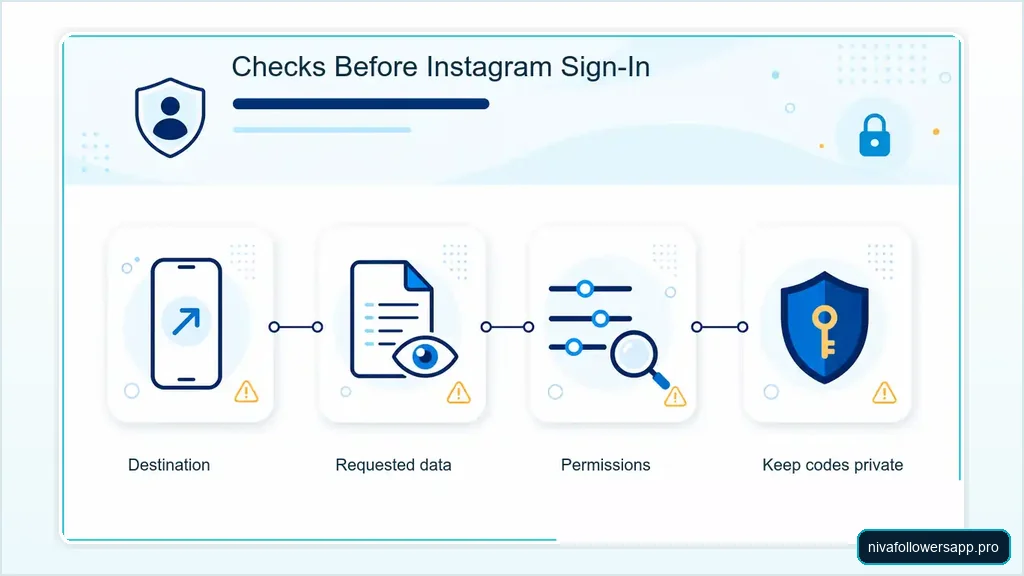
Verify the Requester
Identify whether the prompt comes from the app, a webpage, another platform or Android itself before entering account information.
Read the Destination
If a web page or webview opens, review the visible service identity and destination before continuing.
Use Only the Information the Prompt Requests
Do not provide extra account information simply because an old guide or unrelated build mentions additional fields.
Keep One-Time Codes Private
Do not send a one-time verification code to this website or to someone claiming they need it to fix account access.
Keep Recovery & Backup Codes Private
Recovery and backup codes are sensitive account information and should not be shared as part of a login-support request.
Do Not Share Session or Authentication Data
Do not provide session cookies, authentication tokens or similar session data to someone offering to restore account access.
Do Not Send Credential Screenshots
Avoid screenshots that expose passwords, one-time codes, recovery information, backup codes or other authentication data.
Stop When the Purpose Is Unclear
If the requester, destination or reason for the prompt cannot be identified, stop rather than guessing which sensitive information belongs there.
Niva Followers Login & Account Access Checklist
Use this checklist to understand the current access step before entering sensitive information or treating a later app problem as a login failure.
Identify Who Is Requesting Access
Determine whether the request comes from Niva Followers, a web page, Instagram or Meta, Android itself, or another service.
Read the Current Field Labels
Use the wording shown on the current screen instead of assuming an old tutorial’s username, email or password fields still apply.
Distinguish App Login From Web Authorization
An in-app account prompt and a browser or webview authorization page are separate access contexts.
Distinguish Android Permission From Login
A system permission request controls device or app access and is not automatically an account authentication step.
Check Whether Another Page Opened
If a browser or webview appears, identify its visible service and destination before assuming the original access step failed.
Check Whether a Session Already Exists
If the app is already open, determine whether the user is past the initial access stage rather than automatically calling a later issue a login problem.
Keep Verification Codes Private
Do not send one-time or verification codes to this site or to someone claiming they are needed to fix account access.
Keep Recovery & Session Data Private
Do not share recovery codes, backup codes, session cookies, authentication tokens or similar access data.
Separate Login From Wider App Problems
Crashes, app-launch failures, network conditions and later service problems belong to a broader troubleshooting path.
Stop if the Purpose Is Unclear
If the requester, destination or reason for the prompt cannot be identified, stop rather than guessing which credentials belong there.
Niva Followers Login FAQ
These answers focus on identifying the current access method and keeping account information private without inventing one universal sign-in process.
How do I log in to Niva Followers?
This project has not established one universal login sequence for every current screen or service state. Start by identifying who is requesting access, reading the field labels shown by the installed build, and determining whether the prompt is an app account screen, web authorization page or Android system request.
Does Niva Followers use an Instagram login?
A web or authorization screen may appear in an account-access context, but this project has not established one universal Instagram-login method that applies to every Niva Followers build or account state.
Should I enter my Instagram password into Niva Followers?
Do not assume an in-app field requires Instagram credentials. First identify the requester, destination and purpose of the current prompt, and use only a verified current access flow rather than copying credential instructions from an unrelated tutorial.
Why does a web page open during account access?
A browser or webview can represent a separate authorization context. Review the visible service identity, destination and requested access before continuing. This guide does not assume a specific web authorization technology or official platform integration without evidence.
Is an Android permission prompt the same as login?
No. An Android permission dialog controls app or device access. Account authentication is a separate concept, even when both types of prompts appear during the same app session.
Can Niva Followers stay signed in automatically?
This project has not established automatic sign-in, session duration or persistent-session behavior for the current build. If access appears to remain active, do not infer how that session is stored or how long it will last.
Why does the same login or access screen appear again?
Note whether the app returns to the same screen after an action, but do not assume the cause from that behavior alone. A deeper diagnosis belongs to the dedicated Niva Followers troubleshooting guide rather than this account-access overview.
Is a later task or service problem the same as a login problem?
No. A user can move beyond the initial account access stage and later encounter a separate online task, request or service condition. Those later states should not automatically be labelled as login failures.
What account information should I never share?
Do not share passwords, one-time verification codes, recovery codes, backup codes, session cookies, authentication tokens or screenshots containing sensitive account credentials.
What should I check first if Niva Followers account access is unclear?
First identify who is requesting access and where the prompt appears. Then read the current field labels, distinguish an app account screen from web authorization or Android permission, and check whether the app is already beyond the initial access stage.
Check the Access Type Before Entering Credentials
Identify who is requesting access, determine whether the screen is an app prompt, web authorization page or Android system request, check the current account state, and keep sensitive credentials private.